



Click Below to Get the Code

Browse, clone, and build from real-world templates powered by Harper.
Solution
GitHub Logo

Lower Development and Infrastructure Costs

Harper's distributed application saves money and time across the entire software lifecycle. The unified system architecture of Harper delivers database, application, caching, and streaming services in one performant and cost-efficient technology.
Solution

Lower Development and Infrastructure Costs

By
Harper
March 18, 2025
By
Harper
March 18, 2025
By
Harper
March 18, 2025
March 18, 2025
Harper's distributed application saves money and time across the entire software lifecycle. The unified system architecture of Harper delivers database, application, caching, and streaming services in one performant and cost-efficient technology.
Harper

Unlock Savings for Expensive Workloads

Harper's distributed application platform saves money and time across the entire software lifecycle. The unified system architecture of Harper delivers database, application, caching, and streaming services in one flexible and distributed technology. This shift away from the multi-system backend standard, offers breakthroughs in ease of development, throughput, latency, resilience, and cost-efficiency. Below are some key ways Harper helps you save money on every workload.   
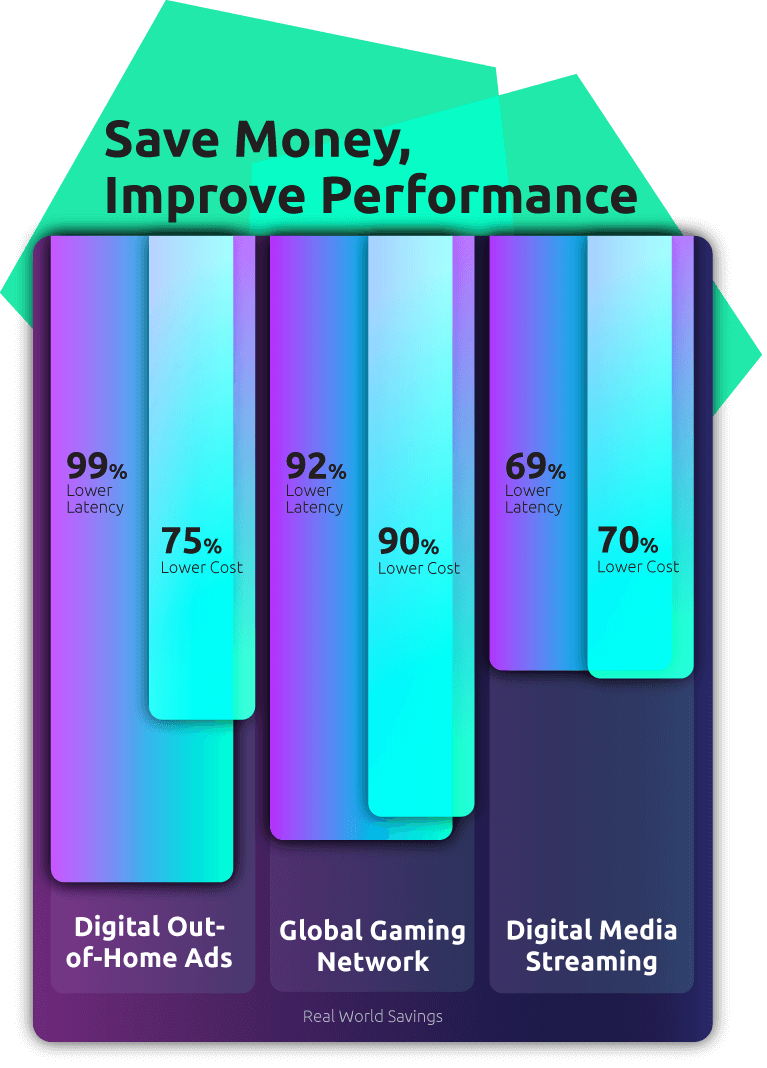
Cost Savings Breakdown Diagram

9 Ways Harper’s Unified System Architecture Delivers Breakthrough Cost-Performance

Save Money During Planning & Development

1. Procurement & Licensing Costs

It takes time to research, test, and select the ideal technology. Additionally, when multiple systems must be used, licensing costs skyrocket since each license must cover the cost of development, marketing, sales, and operations for each organization, making you pay extra overall. A single node of Harper can often replace three to four other existing systems, reducing license and maintenance costs dramatically. 

2. Time-Saving Simplicity 

Time is money, and spending months building and maintaining connections between systems is expensive. Harper is the only solution that lets you forgo this expense entirely. Imagine how fast your developers could move if their tech stack were ready to go before they even started developing. As an example, one telecommunication customer bogged down by cumbersome maintenance and time-consuming development processes has elected to replace their current CockroachDB, Redis, and Kafka stack as they build the next generation of telecommunication systems. The sooner your shift begins to a unified architecture, the greater your long-term savings.

3. Set Your Workloads Free

Successfully deployed on cloud, multi-cloud, hybrid, 5G, bare-metal, and edge, Harper is truly infrastructure agnostic. This gives you complete flexibility in choosing infrastructure vendors, allowing you to position each workload optimally for your use cases and budget. With true workload portability, your team is free to build and innovate on infrastructure where long-term commitments already exist while simultaneously preparing for a low-lift transition to more affordable infrastructure providers.  

Save Money During Operations

4. Reduce Serialization Overhead 

 Serializing and Deserializing data are two of the most expensive operations in any application. By combining application servers, databases, and middleware in one system, Harper reduces the need to serialize and deserialize data, dramatically reducing the amount of computing required for your workload. 

5. Efficient Compute

Most operational databases spend the majority of their resources performing read-and-write operations. The more efficient each operation becomes, the fewer resources the system needs. Being originally designed for lightweight IoT use cases, Harper requires an order of magnitude less memory for most operational workloads compared to systems like MongoDB. 

6. Fewer Parts, Fewer Compute Environments

Traditionally you need a compute environment for each layer of your application stack. One for your application logic, one for your database, one for your caching layer, and one for your middleware.  With Harper, all of those are combined in a single platform dramatically reducing the amount of compute environments required to run your workload. 

7. Reduced Network Costs

Out-of-region egress costs add up for larger enterprises. Calling data from a central data server can be expensive. Since Harper is fully contained and designed for global distribution. Data is retrieved from the nearest node, dramatically reducing cross-region egress costs.  

Additionally, by combining Harper’s capabilities into a single platform, fewer network hops are required.  Traditionally, data needs to be sent from your app to your database to your caching layer all through your middleware, combining this in a single platform means the data makes fewer hops, reducing network overhead. 

8. Savings Grow with Scale

Data redundancy requires a vertically scaled and cost-intensive central database for most systems. In addition to cost, this legacy paradigm creates a performance bottleneck and slow response times for geographically dispersed users. Alternatively, each node of Harper is equipped with everything needed to respond to client requests (including data) and is typically deployed alongside several geo-distributed and synchronized replicas. This ensures that even if an entire region of servers goes down, the request can instantly be routed to the next nearest server to fulfill the request. In addition to deep redundancy and low latency, this system design also offers lower scaling costs. Unlike standard exponential cost models of central data systems, the percentage you save with Harper's linear cost model will increase with every user you add. 

Earn More Money by Seizing Opportunities

9. Opportunity Cost 

Although less tangible of a cost, lost opportunities for innovation are another reason companies switch to Harper. It's all too common for companies to pass on building high-value features because their current architecture and technologies can not effectively support the workload. Since Harper breaks free from traditional capability siloes, developers have significant room to innovate without needing to license, learn, and connect additional technologies. With Harper, your team can innovate at a market-leading pace.

Start Easy, Save Big

Although the most efficient system is built entirely using Harper, a complete migration is not required to start saving. Typically, organizations front-end their most expensive workload to Harper first, allowing them to reap maximum savings and performance gains as quickly as possible. This can look like placing Harper in front of your existing data infrastructure to dramatically reduce the cost of expensive workloads like heavily hit APIs or caching workloads. 

Then, as your team develops new features, Harper begins processing more and more workloads, increasing savings and accelerating time to market for new features.

With prebuilt connectors for MongoDB, DynamoDB, and DataStax, the transition to Harper is easier than you might think. Beyond just saving money, Harper will also improve your system’s throughput, decrease latency, increase reliability, and get products to market faster. 

Start a conversation today with your Harper team to start saving as soon as possible. 

Contact us at hello@harperdb.io.

Unlock Savings for Expensive Workloads

Harper's distributed application platform saves money and time across the entire software lifecycle. The unified system architecture of Harper delivers database, application, caching, and streaming services in one flexible and distributed technology. This shift away from the multi-system backend standard, offers breakthroughs in ease of development, throughput, latency, resilience, and cost-efficiency. Below are some key ways Harper helps you save money on every workload.   

Cost Savings Breakdown Diagram

9 Ways Harper’s Unified System Architecture Delivers Breakthrough Cost-Performance

Save Money During Planning & Development

1. Procurement & Licensing Costs

It takes time to research, test, and select the ideal technology. Additionally, when multiple systems must be used, licensing costs skyrocket since each license must cover the cost of development, marketing, sales, and operations for each organization, making you pay extra overall. A single node of Harper can often replace three to four other existing systems, reducing license and maintenance costs dramatically. 

2. Time-Saving Simplicity 

Time is money, and spending months building and maintaining connections between systems is expensive. Harper is the only solution that lets you forgo this expense entirely. Imagine how fast your developers could move if their tech stack were ready to go before they even started developing. As an example, one telecommunication customer bogged down by cumbersome maintenance and time-consuming development processes has elected to replace their current CockroachDB, Redis, and Kafka stack as they build the next generation of telecommunication systems. The sooner your shift begins to a unified architecture, the greater your long-term savings.

3. Set Your Workloads Free

Successfully deployed on cloud, multi-cloud, hybrid, 5G, bare-metal, and edge, Harper is truly infrastructure agnostic. This gives you complete flexibility in choosing infrastructure vendors, allowing you to position each workload optimally for your use cases and budget. With true workload portability, your team is free to build and innovate on infrastructure where long-term commitments already exist while simultaneously preparing for a low-lift transition to more affordable infrastructure providers.  

Save Money During Operations

4. Reduce Serialization Overhead 

 Serializing and Deserializing data are two of the most expensive operations in any application. By combining application servers, databases, and middleware in one system, Harper reduces the need to serialize and deserialize data, dramatically reducing the amount of computing required for your workload. 

5. Efficient Compute

Most operational databases spend the majority of their resources performing read-and-write operations. The more efficient each operation becomes, the fewer resources the system needs. Being originally designed for lightweight IoT use cases, Harper requires an order of magnitude less memory for most operational workloads compared to systems like MongoDB. 

6. Fewer Parts, Fewer Compute Environments

Traditionally you need a compute environment for each layer of your application stack. One for your application logic, one for your database, one for your caching layer, and one for your middleware.  With Harper, all of those are combined in a single platform dramatically reducing the amount of compute environments required to run your workload. 

7. Reduced Network Costs

Out-of-region egress costs add up for larger enterprises. Calling data from a central data server can be expensive. Since Harper is fully contained and designed for global distribution. Data is retrieved from the nearest node, dramatically reducing cross-region egress costs.  

Additionally, by combining Harper’s capabilities into a single platform, fewer network hops are required.  Traditionally, data needs to be sent from your app to your database to your caching layer all through your middleware, combining this in a single platform means the data makes fewer hops, reducing network overhead. 

8. Savings Grow with Scale

Data redundancy requires a vertically scaled and cost-intensive central database for most systems. In addition to cost, this legacy paradigm creates a performance bottleneck and slow response times for geographically dispersed users. Alternatively, each node of Harper is equipped with everything needed to respond to client requests (including data) and is typically deployed alongside several geo-distributed and synchronized replicas. This ensures that even if an entire region of servers goes down, the request can instantly be routed to the next nearest server to fulfill the request. In addition to deep redundancy and low latency, this system design also offers lower scaling costs. Unlike standard exponential cost models of central data systems, the percentage you save with Harper's linear cost model will increase with every user you add. 

Earn More Money by Seizing Opportunities

9. Opportunity Cost 

Although less tangible of a cost, lost opportunities for innovation are another reason companies switch to Harper. It's all too common for companies to pass on building high-value features because their current architecture and technologies can not effectively support the workload. Since Harper breaks free from traditional capability siloes, developers have significant room to innovate without needing to license, learn, and connect additional technologies. With Harper, your team can innovate at a market-leading pace.

Start Easy, Save Big

Although the most efficient system is built entirely using Harper, a complete migration is not required to start saving. Typically, organizations front-end their most expensive workload to Harper first, allowing them to reap maximum savings and performance gains as quickly as possible. This can look like placing Harper in front of your existing data infrastructure to dramatically reduce the cost of expensive workloads like heavily hit APIs or caching workloads. 

Then, as your team develops new features, Harper begins processing more and more workloads, increasing savings and accelerating time to market for new features.

With prebuilt connectors for MongoDB, DynamoDB, and DataStax, the transition to Harper is easier than you might think. Beyond just saving money, Harper will also improve your system’s throughput, decrease latency, increase reliability, and get products to market faster. 

Start a conversation today with your Harper team to start saving as soon as possible. 

Contact us at hello@harperdb.io.

Harper's distributed application saves money and time across the entire software lifecycle. The unified system architecture of Harper delivers database, application, caching, and streaming services in one performant and cost-efficient technology.

Download

White arrow pointing right
Harper's distributed application saves money and time across the entire software lifecycle. The unified system architecture of Harper delivers database, application, caching, and streaming services in one performant and cost-efficient technology.

Download

White arrow pointing right
Harper's distributed application saves money and time across the entire software lifecycle. The unified system architecture of Harper delivers database, application, caching, and streaming services in one performant and cost-efficient technology.

Download

White arrow pointing right

Explore Recent Resources

Blog
GitHub Logo

Why a Multi-Tier Cache Delivers Better ROI Than a CDN Alone

Learn why a multi-tier caching strategy combining a CDN and mid-tier cache delivers better ROI. Discover how deterministic caching, improved origin offload, lower tail latency, and predictable costs outperform a CDN-only architecture for modern applications.
Cache
Blog
Learn why a multi-tier caching strategy combining a CDN and mid-tier cache delivers better ROI. Discover how deterministic caching, improved origin offload, lower tail latency, and predictable costs outperform a CDN-only architecture for modern applications.
Person with short dark hair and moustache, wearing a colorful plaid shirt, smiling outdoors in a forested mountain landscape.
Aleks Haugom
Senior Manager of GTM & Marketing
Blog

Why a Multi-Tier Cache Delivers Better ROI Than a CDN Alone

Learn why a multi-tier caching strategy combining a CDN and mid-tier cache delivers better ROI. Discover how deterministic caching, improved origin offload, lower tail latency, and predictable costs outperform a CDN-only architecture for modern applications.
Aleks Haugom
Jan 2026
Blog

Why a Multi-Tier Cache Delivers Better ROI Than a CDN Alone

Learn why a multi-tier caching strategy combining a CDN and mid-tier cache delivers better ROI. Discover how deterministic caching, improved origin offload, lower tail latency, and predictable costs outperform a CDN-only architecture for modern applications.
Aleks Haugom
Blog

Why a Multi-Tier Cache Delivers Better ROI Than a CDN Alone

Learn why a multi-tier caching strategy combining a CDN and mid-tier cache delivers better ROI. Discover how deterministic caching, improved origin offload, lower tail latency, and predictable costs outperform a CDN-only architecture for modern applications.
Aleks Haugom
Tutorial
GitHub Logo

Real-Time Pub/Sub Without the "Stack"

Explore a real-time pub/sub architecture where MQTT, WebSockets, Server-Sent Events, and REST work together with persistent data storage in one end-to-end system, enabling real-time interoperability, stateful messaging, and simplified service-to-device and browser communication.
Harper Learn
Tutorial
Explore a real-time pub/sub architecture where MQTT, WebSockets, Server-Sent Events, and REST work together with persistent data storage in one end-to-end system, enabling real-time interoperability, stateful messaging, and simplified service-to-device and browser communication.
A man with short dark hair, glasses, and a goatee smiles slightly, wearing a black shirt in front of a nature background.
Ivan R. Judson, Ph.D.
Distinguished Solution Architect
Tutorial

Real-Time Pub/Sub Without the "Stack"

Explore a real-time pub/sub architecture where MQTT, WebSockets, Server-Sent Events, and REST work together with persistent data storage in one end-to-end system, enabling real-time interoperability, stateful messaging, and simplified service-to-device and browser communication.
Ivan R. Judson, Ph.D.
Jan 2026
Tutorial

Real-Time Pub/Sub Without the "Stack"

Explore a real-time pub/sub architecture where MQTT, WebSockets, Server-Sent Events, and REST work together with persistent data storage in one end-to-end system, enabling real-time interoperability, stateful messaging, and simplified service-to-device and browser communication.
Ivan R. Judson, Ph.D.
Tutorial

Real-Time Pub/Sub Without the "Stack"

Explore a real-time pub/sub architecture where MQTT, WebSockets, Server-Sent Events, and REST work together with persistent data storage in one end-to-end system, enabling real-time interoperability, stateful messaging, and simplified service-to-device and browser communication.
Ivan R. Judson, Ph.D.
News
GitHub Logo

Harper Recognized on Built In’s 2026 Best Places to Work in Colorado Lists

Harper is honored as a Built In 2026 Best Startup to Work For and Best Place to Work in Colorado, recognizing its people-first culture, strong employee experience, and values of accountability, authenticity, empowerment, focus, and transparency that help teams thrive and grow together.
Announcement
News
Harper is honored as a Built In 2026 Best Startup to Work For and Best Place to Work in Colorado, recognizing its people-first culture, strong employee experience, and values of accountability, authenticity, empowerment, focus, and transparency that help teams thrive and grow together.
Colorful geometric illustration of a dog's head resembling folded paper art in shades of teal and pink.
Harper
News

Harper Recognized on Built In’s 2026 Best Places to Work in Colorado Lists

Harper is honored as a Built In 2026 Best Startup to Work For and Best Place to Work in Colorado, recognizing its people-first culture, strong employee experience, and values of accountability, authenticity, empowerment, focus, and transparency that help teams thrive and grow together.
Harper
Jan 2026
News

Harper Recognized on Built In’s 2026 Best Places to Work in Colorado Lists

Harper is honored as a Built In 2026 Best Startup to Work For and Best Place to Work in Colorado, recognizing its people-first culture, strong employee experience, and values of accountability, authenticity, empowerment, focus, and transparency that help teams thrive and grow together.
Harper
News

Harper Recognized on Built In’s 2026 Best Places to Work in Colorado Lists

Harper is honored as a Built In 2026 Best Startup to Work For and Best Place to Work in Colorado, recognizing its people-first culture, strong employee experience, and values of accountability, authenticity, empowerment, focus, and transparency that help teams thrive and grow together.
Harper
Comparison
GitHub Logo

Harper vs. Standard Microservices: Performance Comparison Benchmark

A detailed performance benchmark comparing a traditional microservices architecture with Harper’s unified runtime. Using a real, fully functional e-commerce application, this report examines latency, scalability, and architectural overhead across homepage, category, and product pages, highlighting the real-world performance implications between two different styles of distributed systems.
Comparison
A detailed performance benchmark comparing a traditional microservices architecture with Harper’s unified runtime. Using a real, fully functional e-commerce application, this report examines latency, scalability, and architectural overhead across homepage, category, and product pages, highlighting the real-world performance implications between two different styles of distributed systems.
Person with short dark hair and moustache, wearing a colorful plaid shirt, smiling outdoors in a forested mountain landscape.
Aleks Haugom
Senior Manager of GTM & Marketing
Comparison

Harper vs. Standard Microservices: Performance Comparison Benchmark

A detailed performance benchmark comparing a traditional microservices architecture with Harper’s unified runtime. Using a real, fully functional e-commerce application, this report examines latency, scalability, and architectural overhead across homepage, category, and product pages, highlighting the real-world performance implications between two different styles of distributed systems.
Aleks Haugom
Dec 2025
Comparison

Harper vs. Standard Microservices: Performance Comparison Benchmark

A detailed performance benchmark comparing a traditional microservices architecture with Harper’s unified runtime. Using a real, fully functional e-commerce application, this report examines latency, scalability, and architectural overhead across homepage, category, and product pages, highlighting the real-world performance implications between two different styles of distributed systems.
Aleks Haugom
Comparison

Harper vs. Standard Microservices: Performance Comparison Benchmark

A detailed performance benchmark comparing a traditional microservices architecture with Harper’s unified runtime. Using a real, fully functional e-commerce application, this report examines latency, scalability, and architectural overhead across homepage, category, and product pages, highlighting the real-world performance implications between two different styles of distributed systems.
Aleks Haugom
Tutorial
GitHub Logo

A Simpler Real-Time Messaging Architecture with MQTT, WebSockets, and SSE

Learn how to build a unified real-time backbone using Harper with MQTT, WebSockets, and Server-Sent Events. This guide shows how to broker messages, fan out real-time data, and persist events in one runtime—simplifying real-time system architecture for IoT, dashboards, and event-driven applications.
Harper Learn
Tutorial
Learn how to build a unified real-time backbone using Harper with MQTT, WebSockets, and Server-Sent Events. This guide shows how to broker messages, fan out real-time data, and persist events in one runtime—simplifying real-time system architecture for IoT, dashboards, and event-driven applications.
A man with short dark hair, glasses, and a goatee smiles slightly, wearing a black shirt in front of a nature background.
Ivan R. Judson, Ph.D.
Distinguished Solution Architect
Tutorial

A Simpler Real-Time Messaging Architecture with MQTT, WebSockets, and SSE

Learn how to build a unified real-time backbone using Harper with MQTT, WebSockets, and Server-Sent Events. This guide shows how to broker messages, fan out real-time data, and persist events in one runtime—simplifying real-time system architecture for IoT, dashboards, and event-driven applications.
Ivan R. Judson, Ph.D.
Dec 2025
Tutorial

A Simpler Real-Time Messaging Architecture with MQTT, WebSockets, and SSE

Learn how to build a unified real-time backbone using Harper with MQTT, WebSockets, and Server-Sent Events. This guide shows how to broker messages, fan out real-time data, and persist events in one runtime—simplifying real-time system architecture for IoT, dashboards, and event-driven applications.
Ivan R. Judson, Ph.D.
Tutorial

A Simpler Real-Time Messaging Architecture with MQTT, WebSockets, and SSE

Learn how to build a unified real-time backbone using Harper with MQTT, WebSockets, and Server-Sent Events. This guide shows how to broker messages, fan out real-time data, and persist events in one runtime—simplifying real-time system architecture for IoT, dashboards, and event-driven applications.
Ivan R. Judson, Ph.D.